Geography of Kyrgyzstan

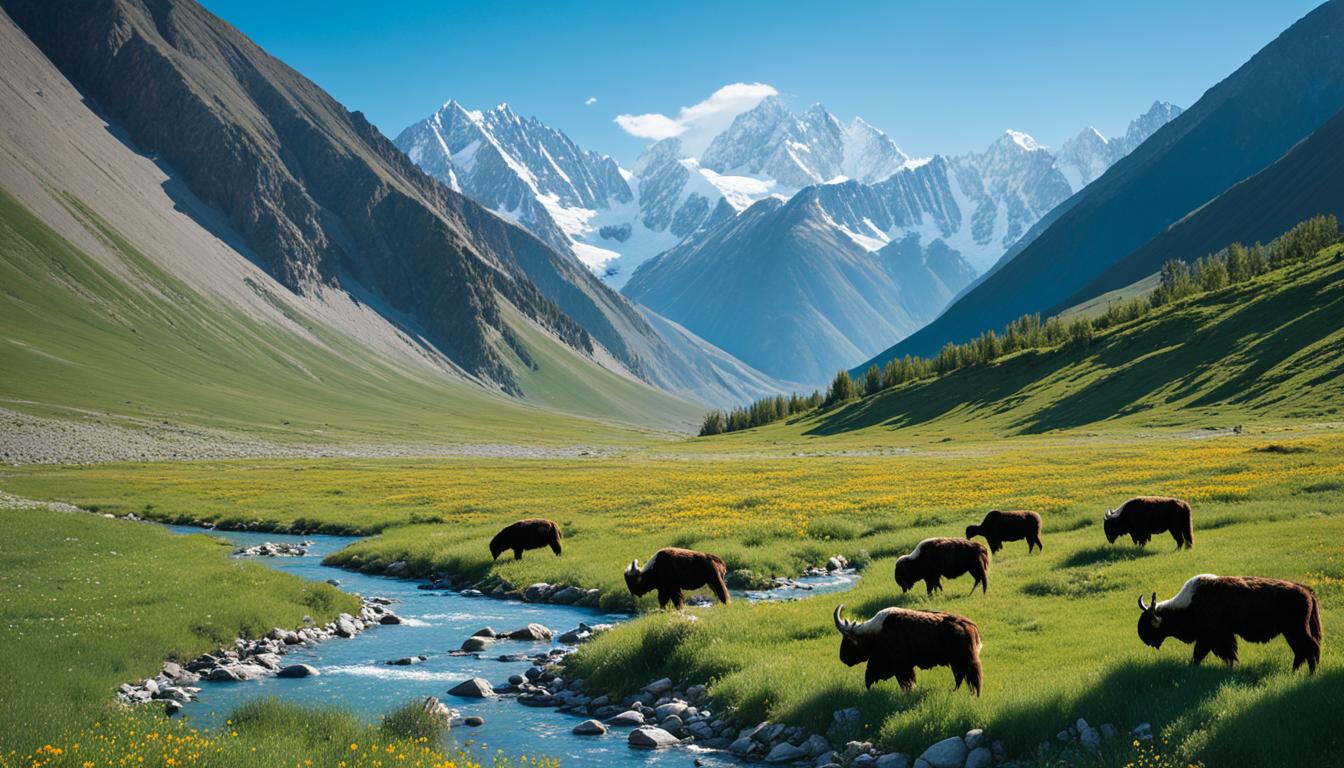
Kyrgyzstan is a Central Asian country known for its breathtaking landscapes, including the towering Tien Shan mountains, lush valleys, and alpine pastures. Its traditional nomadic culture thrives in these regions, with herders moving seasonally to graze livestock like yaks, valued for their milk, wool, and meat. The yurts, portable felt tents, symbolize the nomadic lifestyle, which remains an integral part of Kyrgyz heritage. Popular with eco-tourists, the country offers activities like trekking, horseback riding, and stays in stunning locations like Issyk-Kul Lake and Son-Kul Lake. Kyrgyzstan beautifully blends its rich traditions with its majestic natural environment.
Kyrgyzstan, a landlocked country in Central Asia, is home to several notable bodies of water, despite its mountainous terrain. One of the most significant is Lake Issyk-Kul, the second-largest saltwater lake in the world, after the Caspian Sea. This beautiful lake, surrounded by snow-capped mountains, is a popular tourist destination due to its clear, mineral-rich waters and scenic landscapes. Another important water source is the Naryn River, which originates in the Tien Shan Mountains and flows through the country's central regions, providing water for agriculture and hydroelectric power. Additionally, Kyrgyzstan has numerous smaller lakes and rivers, as well as glaciers, which contribute to its water supply and sustain the region's ecosystems. Despite the abundance of water resources, Kyrgyzstan faces challenges related to water management and access, especially in rural areas.
